spright.co
- Released
- 2026
- Role
- Front end, back end & ongoing support
- Client
- Spright
- Type
- Full-stack
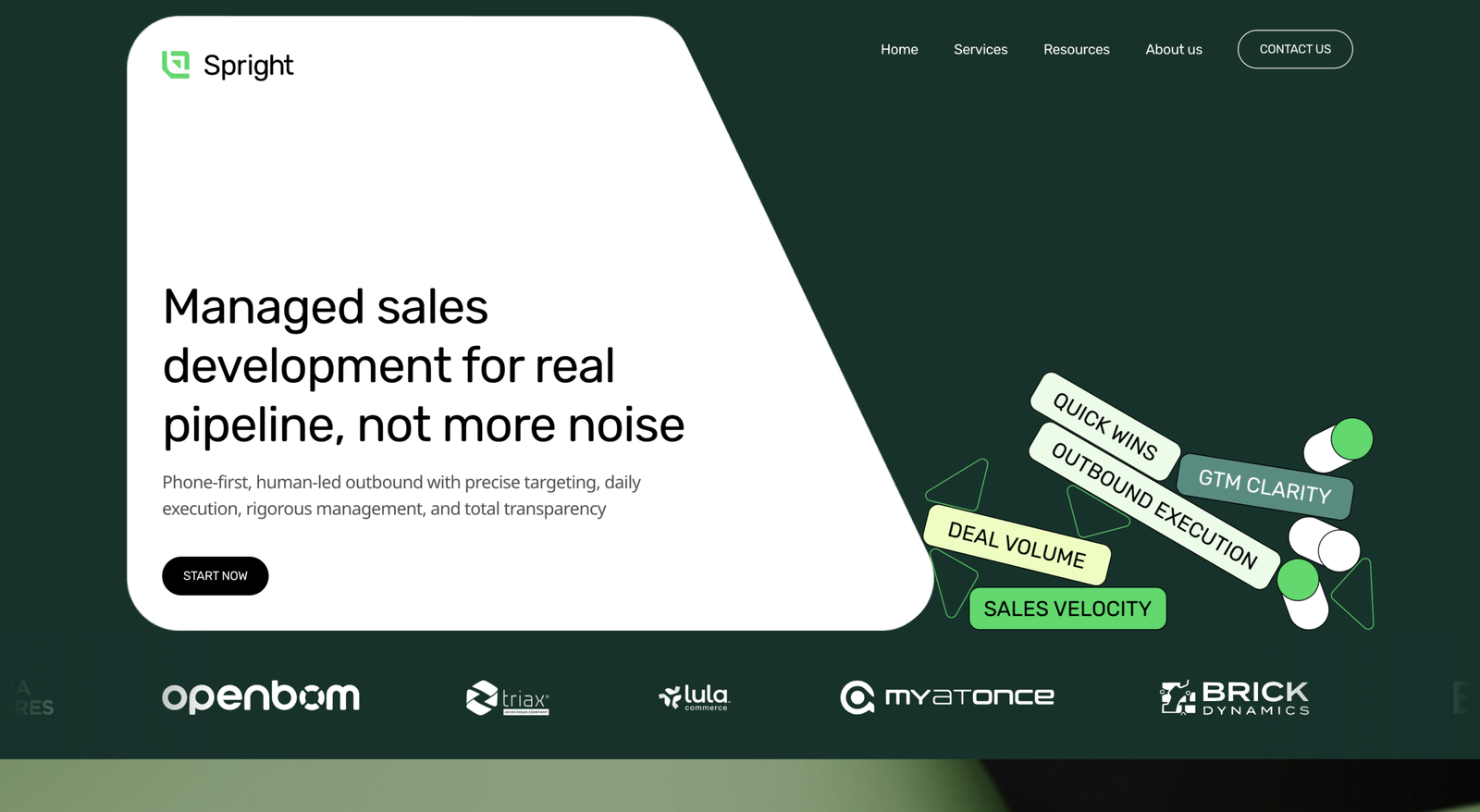
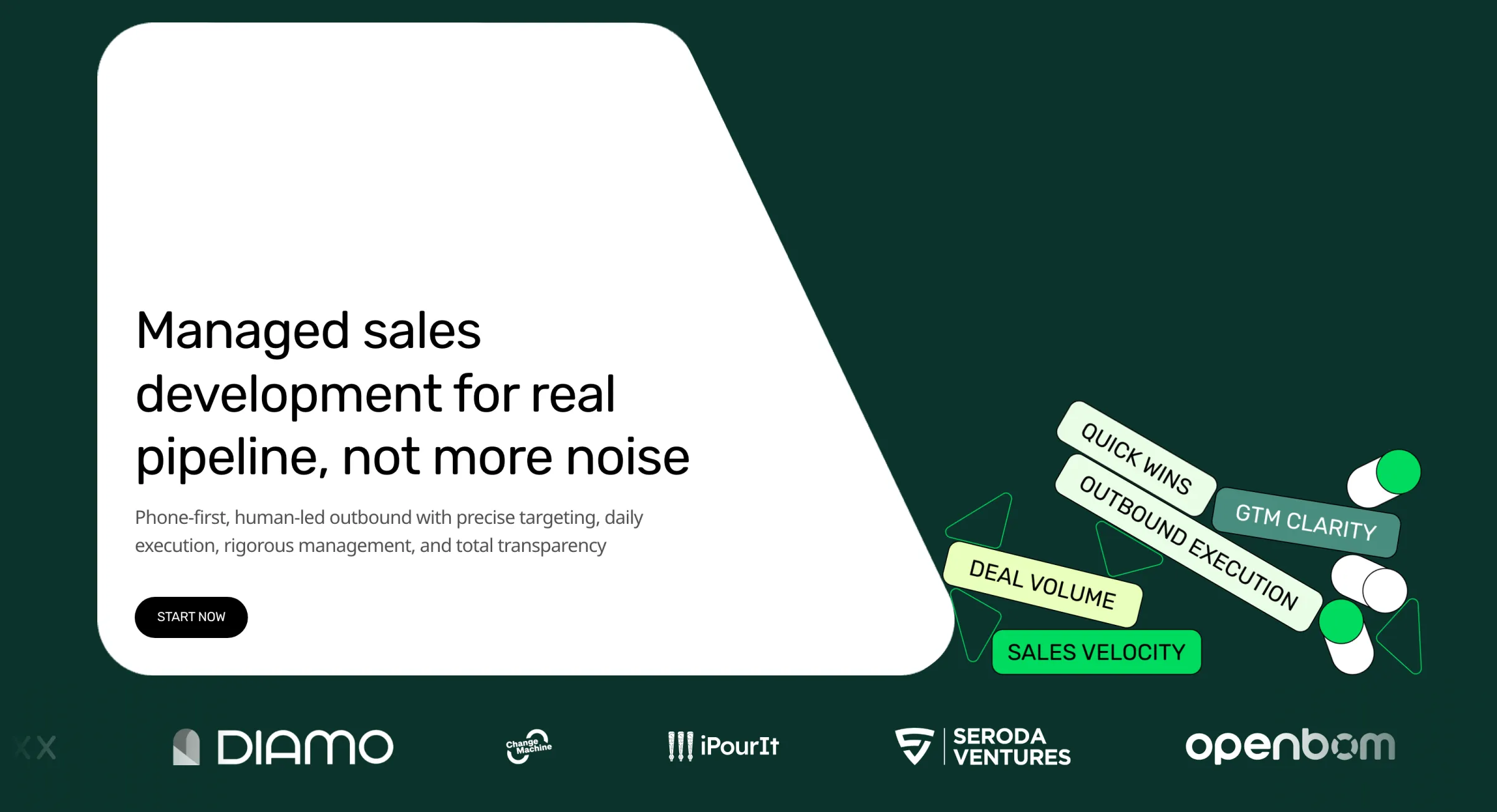
Spright runs outbound sales development for early-stage B2B tech companies in the US — the team a startup hires when it has a product and no repeatable pipeline. They arrived without positioning, brand or site; by the end there was all three, and I built and now maintain the site half of it.
The brief
Selling sales development is awkward: the category is crowded with lead-gen agencies that all promise the same thing, and the difference only becomes obvious once someone sees how the work is actually run. A page of claims would have read like everyone else on the shortlist.
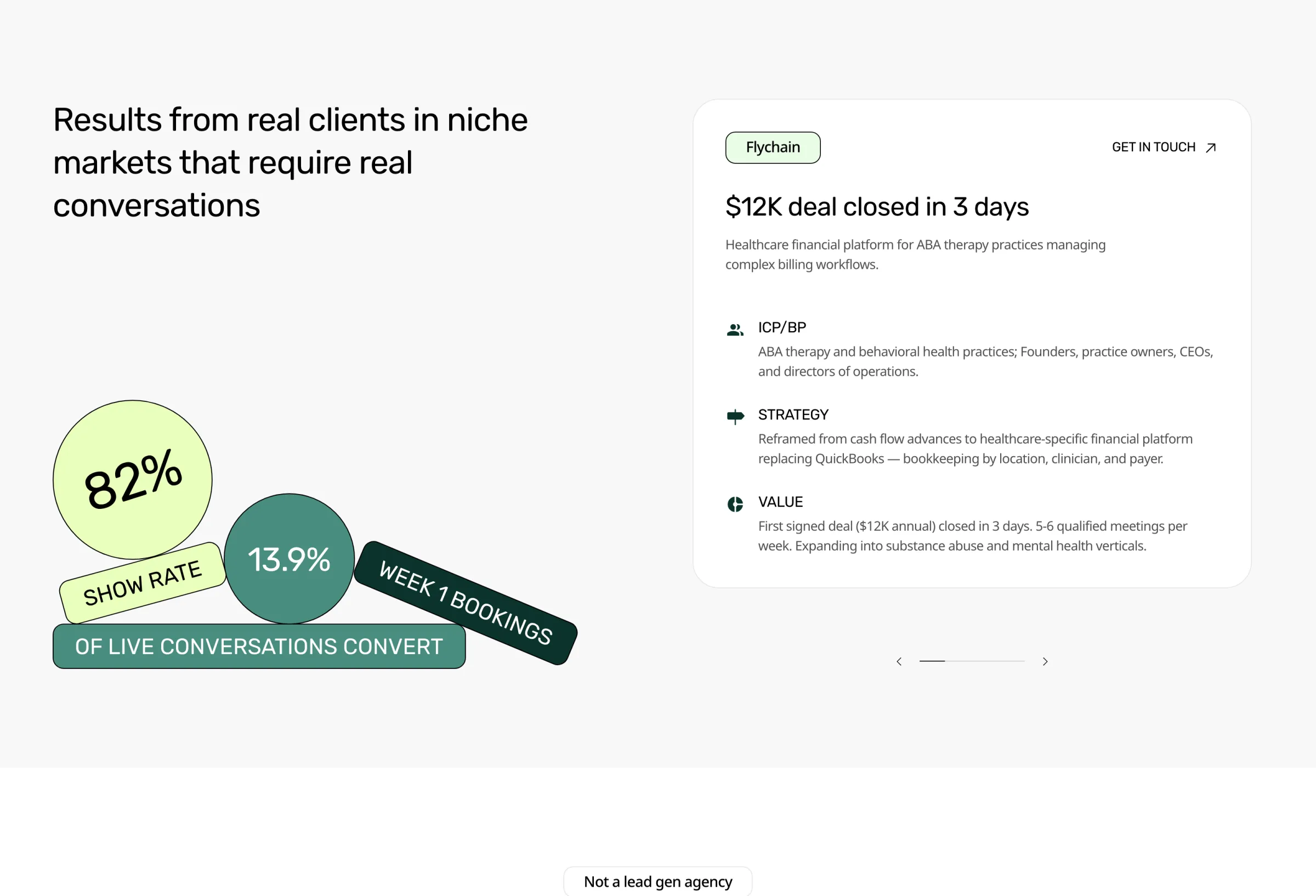
So the site had to demonstrate rather than assert — show the process, the ownership model and real recorded calls — while staying quick enough that a founder skimming it on a phone between meetings gets the point in the first screen.
What I built
Every section is a small argument with its own motion: cards that stack and tilt as they arrive, a programme timeline that unfolds step by step, principles that assemble as you read them. All of it is reveal-on-enter rather than scrubbed to scroll position, so nothing depends on how fast the visitor moves.
The content model is ACF throughout — cards, steps, principles and FAQ entries are all typed fields, so the team edits copy without touching layout. I stayed on afterwards for support: changes, new sections and fixes as the offer evolved.
- 6 months
- Positioning to launch
- Ongoing
- Support retainer
A loader that only ever runs once
The counter and mark hold the screen while the page assembles, then hand over to the hero. It fires on a first visit and never again in that session — a loader that greets you on every navigation stops being an intro and becomes a toll.
Cards that stack as you scroll
The operating model arrives one card at a time, each tilted slightly off the grid. The tilt is the whole trick: it keeps a rigid four-card layout from reading like a spec sheet, without costing anything at runtime.
A call library with its own player
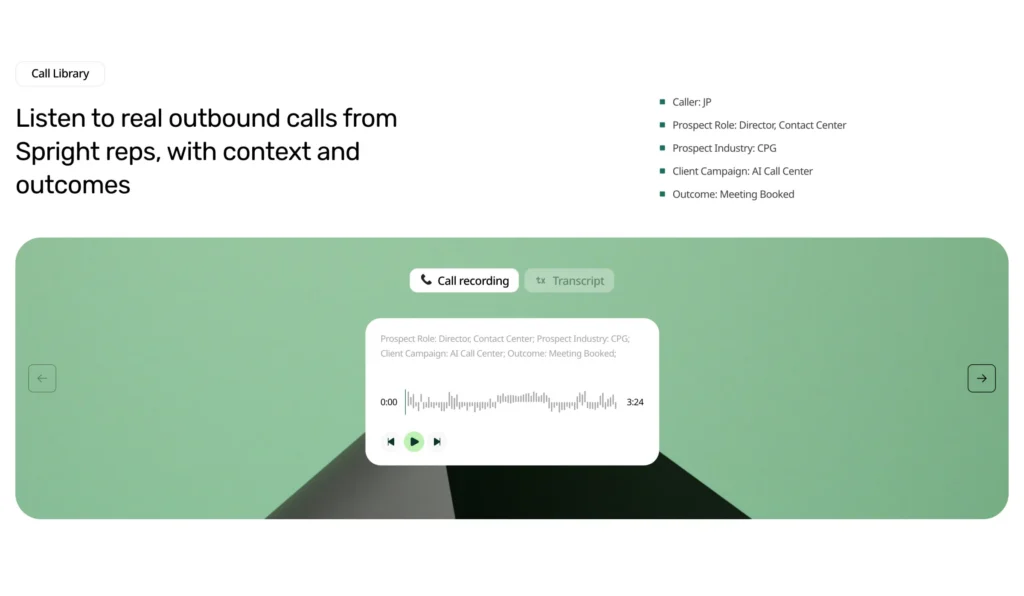
Real outbound calls, each with the prospect role, industry and outcome next to it. The player is custom, not an embed: waveform, transcript toggle, and navigation between calls, so the proof of work sits inside the page instead of on someone else's platform.
Principles that assemble as you read
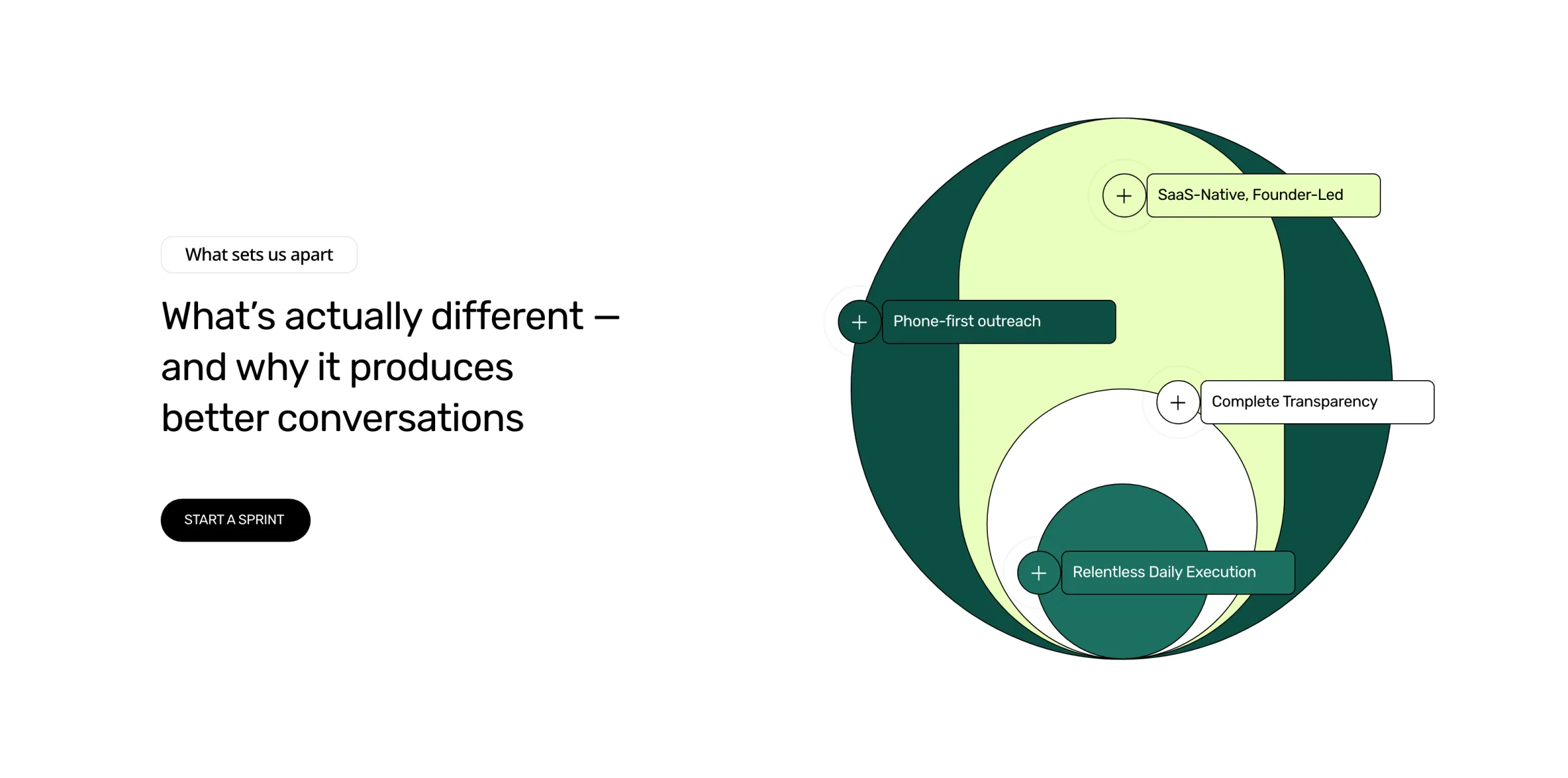
On the about page the principles arrive in order rather than as a finished wall of text, which slows the reader down just enough to actually read them.